Zarraga Multi-Purpose Cooperative Organized Farmers Dialogue with 3 government Agencies

By: Enrique Canizares III

Last September 20,2019 a Farmer’s Dialogue among the 3 National Agencies was organized by the Zarraga Multi-Purpose Cooperative and ESSA was invited as an observer for the event. The Department of Agriculture (DA), the National Food Authority (NFA) and the National Irrigation Agency (NIA) has to send their representatives as the coop facilitated a dialogue between the agencies and the farmers to formulate solutions to the on-going crisis in rice prices. Sadly, the Department of Agriculture has no representative and it somehow set a precedence to what will day might look like.
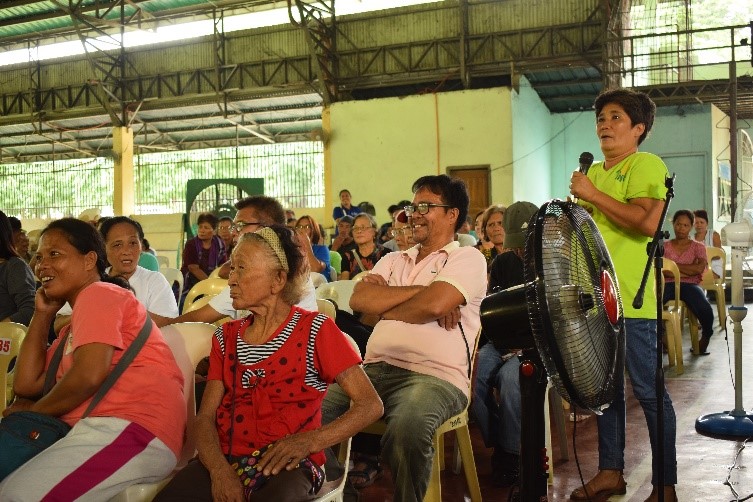
Jocelyn Pere-ira the Chairperson of the Board of Directors of the cooperatives and Kim M. Gallego gave the the opening remarks and rationale for whole program respectively. Both BOD gave passionate remarks on what Agriculture means as a foundation and driving force of our modern human civilization.

Engr. Randy C. Alipis from NIA discussed the current programs of the agency and how the farmers can avail of their free services. The agency only deals with organizations so if small scale farmers would like to avail of irrigation services they have to be affiliated with organizations. Many areas in Zarraga are still struggling with their current supply as their current supply of water is not enough especially for rice farmers. The continued challenges on water supply from storage to distribution are continuously adding up to the burden the farmers are carrying now. Equipment have not been maintained, canals are clogged and some farmers block the irrigation systems to store water for themselves. These problems are but symptoms of a deeper societal problem when looking at real sustainability.

Merlyn Chua the representative from NFA gave a background of the agencies establishment and what programs they were focused on. Many of the programs have been change since the advent of the rice tarification. To help out small-scale rice farmers, NFA is currently establishing scheduled “Buying Stations” all throughout the province to buy rice from local farmers, the purchasing price from NFA is at 19 Php per kilo compare to the 17Php in the market. The Agency requires for rice to be with 14% moisture, clean and dry requirement to ensure the best state for storage. The prices go down when moisture content is higher, and currently, there is insufficient dryers that are able to meet the demand for drying rice harvest since the number of the equipment NFA owns is limited and the both dryers that Zarraga owns are not operational. Drying rice also take time. For rice to reach 14% moisture content take an average time of 36hours per 50 sacks or depends on the capacity of the dryer.

The Zarraga Multi-Purpose Cooperative is also ensuring the produce of the members who are rice producers. The coop will buy all the rice produce of their members because the harvest is due in the coming weeks. The coop though will not be able to buy-out rice from non-members because of the limited funds and at the same time the long turn-over of rice because of the huge supply right now.

The Zarraga Multi-Purpose Cooperative deserve commendation because of their intentions to create real dialogue between the government agencies and the stake-holders in agriculture. Though there were solutions to pacify the urgent concerns of the farmers, there was no real view or picture of what real sustainability might look like. Also, there little dialogue between the farmers and the agencies concerned. The framework was compartmentalized when the problems where systemic. So the solutions offered where but short term solutions.

Western Visayas 7th Regional Organic Agriculture Congress

By: Enrique Cañizares III (ESSA Researcher)

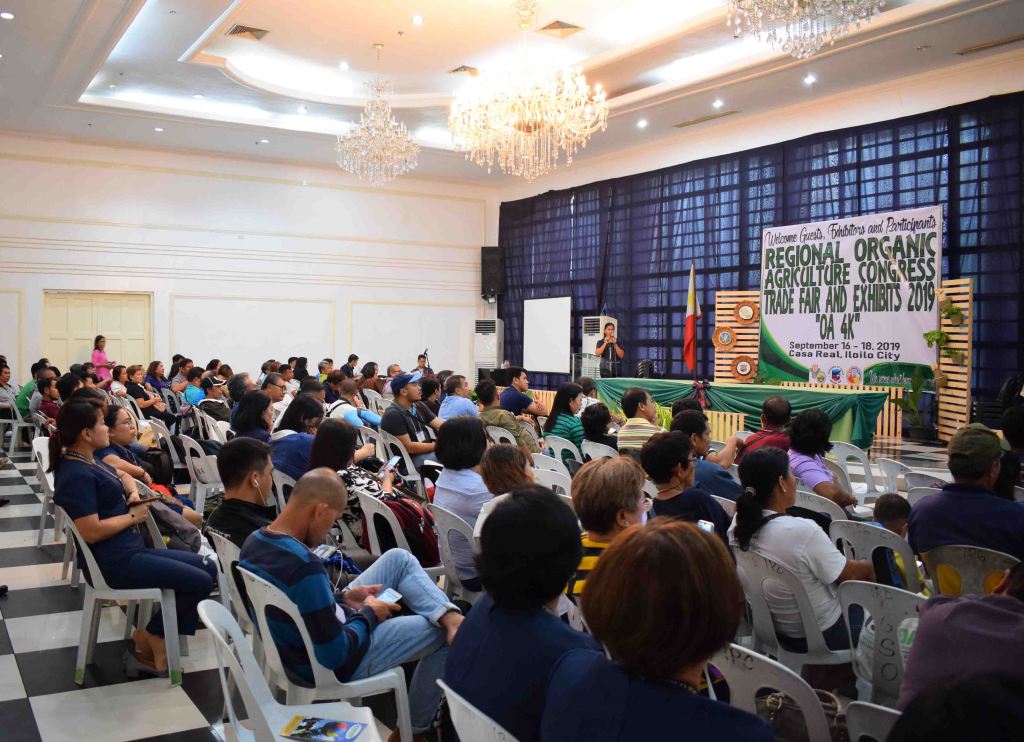
Last September 17 and 18, 2019 the 7th Regional Organic Agriculture Congress for Western Visayas was held at Casa Real of the Provincial Capitol.

Farmers and organic agriculture advocates from all over the region came together to take a closer look at the Organic Agriculture Roadmap for Western Visayas.

The program started with opening remarks by Gov. Arthur Defensor Jr. of the Province of Iloilo. The governor also an advocate of organic agriculture states that one of his intentions is, for organic food to be the center piece of tourism, and that organic agriculture should elevate into a thriving business because of the opportunities brought by farm tourism.

To address the challenge of sustainability is to provide support especially to young Agri-Preneurs for them to generate their interest to go back in agriculture. The Governor plans to have further dialogue with the farmers about their needs so that the province can align its program to meet these needs.

The sequence was followed by presentations of Organic Agriculture Programs and roadmaps both from the Department of Agriculture Western Visayas and the National Organic Agriculture Program (NOAP) for 2017 – 2023.

A representative from La Granja Crop Research and Development in the person of Jennifer L. Ferrer gave a presentation about Organic Seed Production for peanuts, soybeans and mung beans. The presentation includes results of production as well as applied interventions for the period of 2 years with the inclusion of factors such as drought and heavy rains.

The credit programs that can be accessed by small and medium farmers through Landbank was presented by its representative. Though there was no specific credit program for Organic Agriculture. The acknowledgement of the bulk of application they receive throughout the day is one of the main factors that leads to the delays in the release of funds.

An update of the Organic Agriculture Resolutions was also presented by the representative of NOAB. A total of 22 approved resolutions as of July 31, 2019 that was sponsored by different regions all throughout the country.

The said resolutions are the following:

  1. Requiring NOAB Government Permanent Representatives to Designate Organic Agriculture Focal Persons in their Departments
  2. Recommending the NOAB FY 2020 Plan and Budget
  3. Recommending the Approval of the Guidelines for the Preparation of the National Organic Agriculture Program (NOAP) FY 2020 Plan and Budget Proposal
  4. Requiring NOAB Government Permanent Representatives to Attend the Regular Meetings
  5. Adopting the 15th National Organic Agriculture Congress (NOAC) Resolutions
  6. Approving Camp Benjamin in Alfonso, Cavite as the Official Venue and November 11 – 15, 2019 as the Official Date of the 16th National Organic Agriculture Congress with the Theme

“OA4K: Organikong Agrikutura sa Kumikitang Kabuhayan para sa Kalusugan at Kapaligiran”

  1. Recommending the Approval of the Revision of the National Organic Agriculture Achievers Awards (NOAAA) Guidelines
  2. Recommending the Approval of the Guidelines for the National-On-the-Spot Essay Writing and Poster Making Contest
  3. Recommending the Approval of the Guidelines for Organic Agriculture Research Category
  4. Recommending the Approval of the Guidelines for Kabataang OA 2019
  5. Requiring National Organic Agriculture Board NOAB Government Permanent Representatives to Designate Regional Organic Agriculture Focal Persons in their Department
  6. Adopting the Recommendations of the End of Program Assessment Report for the National Organic Agriculture Program
  7. Recommending the Department of Education through its Gulayan sa Paaralan Program to establish organic gardens based on the provisions of the Philippine National Standards on Organic Agriculture
  8. Recommending the Department of Interior and Local Government Units through its Gulayan sa Barangay Program to establish organic gardens based on the provisions of the Philippine National Standards on Organic Agriculture
  9. Recommending the Department of Interior and Local Government to include the implementation of Organic Agriculture Program as one of the Criteria for the Seal of Good Local Governance
  10. Recommending the Department of Health to instruct all accredited hospitals to serve organic food
  11. Recommending the Department of Social Welfare and Development to integrate the organic agriculture program in its Pantawid Pamilyang Pilipino Program
  12. Recommending the National Organic Agriculture Program – National Program Coordinating Office to explore the adaptability of the Information Technology Enabled Maturity Assessment of the Department of Agrarian Reform to the implementation of the National Organic Agriculture Program
  13. Recommending the Department of Agriculture – Regional Field Offices to conduct random monitoring of organic farms and surveillance of markets retailing organic produce, and use the Rapid Bio-assay for Pesticides Residue in the analysis of organic produce.
  14. Recommending the Department of Agriculture to include organic rice production in the Philippine Rice Industry Roadmap 2040
  15. Recommending the Approval of the Revised Implementing Rules and Regulations on Accreditation of Private Organic Agriculture Extension Service Providers, and
  16. Requesting the Conduct of Value Chain Analysis of Organic Agriculture by the Department of Agriculture and the Department of Trade and Industry

The National Organic Agriculture Program is currently focused on these themes.

  1. Institutional Development and Strengthening and Results-Based Monitoring and Evaluation
  2. Research and Development
  3. Extension and Capacity Building, Promotion, Advocacy and Education
  4. Production and Post-Production Support
  5. Market Support Services
  6. Regulatory Support Services

The second day started with the presentation of the Regional Organic Agriculture Program Direction by Glenda A. Himatay as the former focal person of the program and at the same time an informal turnover to the new Regional Focal Person for Organic Agriculture, Mr. Andrew Palomar.

The activities were followed by a discussion on the health benefits of organic products by Dr. Arleen Joy Vallejo. This is in relation to the new and emerging community of doctors who are moving away from the usual prescription approach of medication to a holistic medicine now popularly known as Lifestyle Medicine.

From a new form of health consciousness, an inspiring and success stories follow from a Doctor and from an Accountant.  A growing trend of Professionals engaging into farming. A former Resident Physician at the Western Visayas Medical Center, Dr. Alfredo Gulmatico now owns Doc Haven’s Farm together with his family who are also involve in the operations of the farm.

Mrs. Nhilda Rhanee L. Causing who is an Accountant is on the process of developing their family farm which showcases Organic SRI production. Both farmers have established their market through quality production and trust built through the years.  And with the advent of farm tourism both farms are now on the process of developing to meet its demands.

The program ended with additional resolutions from the participants that was facilitated by Mr. Elias Sandig from the Department of Agriculture and was followed by the awarding of winners for the cooking and poster making contest held in this program. The National Organic Agriculture Congress and Organic Agriculture in general are crucial in threading a new pathway for the Philippine society

“Pursuing your career related to your degree doesn’t guarantee your happiness”

Executive Director of Champion Farmers in Lambunao, Iloilo

Mr. Ariel Lastica, is a registered Medical Technologist. He graduated as Bachelor of Science in Public Health at University of Philippines-Visayas and attained his Masters Degree in Entomology at UP Los Banos.  Despite this educational attainment, he is now pursuing and enjoying his promising career in Agriculture as the Executive Director of Champion Farmers Program of Lambunao, Iloilo.

Ariel had his long way before working confidently in this field of Agriculture as he once doubted himself. As a former Public Health Manager of DOH Romblon and WHO Staff in Palawan, he realized that medicine is not his career to pursue. The routine works and activities he performs in this field easily made him bored.  It is then that a decision to go back in Lambunao was triggered because he has to take care of his mom who was diagnosed with brain tumour that time and  that, he also felt the emptiness while being away from his family and missed out the opportunities to celebrate different occasions in his hometown.  Staying for good in Lambunao, he grabbed the opportunity to work as Executive Assistant for Health in the Local Government Unit.

His journey in agriculture started when Former Lambunao Mayor Jason Gonzales and currently Board Member of Iloilo 3rd District offered him the vacant position in Municipal Agricultural Office as the Agriculturist.  To learn more in this field, Mayor Jason back then, give him a book about permaculture for him to read and they discussed it after he finished reading. Then he was also sent to Palawan for two weeks to attend a permaculture seminar and, when he got back in Lambunao, they started the planning of the framework.

At that point, he decided to accept the position because he saw it as a challenge and an avenue for him to take new learnings. Aside from that, he is very observant on what is really happening in the areas of agriculture and to the farmers itself.  This new journey is not easy for him for the reason that other people have doubts on his potentials because he is from the field of health and medicine. He then too, started questioning his skills and capability as being part now of Agriculture Department. But Mayor Jason helped him to gain and boost his confidence. He told Ariel that even he is not an agriculturist by profession, as long as he is capable to do the job, you are fit for the position, regardless of your background.

From then, opportunities started to knock on his door. Currently, Mr. Ariel Lastica is still the Executive Director of the Champion Farmers; a Council Member of ESSA; and actively affiliated in different organizations with relevance to his passion.

Christopher Enate’s best practices and his call for the new generation to help and join in the farming industry

Christopher Enate

Chris, is a Systems of Rice Intensification (SRI) Farmer in Dao, Capiz, he is the eldest son of Mr. and Mrs. Jose Robinson Enate and considered himself as farmer by birth though he poses a Bachelor Degree in Industrial Electronics Technology and was a Brgy. Kagawad for almost 5 years.

Before he became one of the promising SRI farmers of the country, he once had doubt about this technology in organic farming. He started practicing organic farming after Yolanda Typhoon crashes all their livelihood. During the aftermath of the super typhoon, the IRelief Foundation came to their place to help them start a new chapter of their lives. All the while they thought that this organization is bringing financial assistance but instead, IRlief brought SRI to give them the knowledge and inputs so that they can start through it. At first, only his father and siblings have the interest to attend the trainings and seminars because Chris is busy doing his duty as a barangay official. He was busy then attending the needs and assisting the delivery relief goods to their fellow victims in the community. But the fact was, he is also doubtful about the technology, but then, he became curious because of the stories being shared by his father and siblings that made him finally decided to attend.

Year 2015, he started applying what he learnt to his 150 square meters of land. He made and used organic concoctions for his land preparation. After two years, he converted his 3 hectares land into organic because he realized that conventional farming is expensive compare to organic farming. He used to spend even more than Fifty Thousand Pesos (P50,000.00) on chemical inputs. Another good reason of his going into organic is that, his father is diabetic, so he realized that he wants to produce a healthy food for his family. And as to his observation, many children have different serious sickness and diseases such as cancer that lead to their death. With these realizations, he wanted to produce an affordable and chemical free product that the people can buy without hesitating.

Rotary Weeding

Like other organic farmers, Chris also experiencing difficulties and challenges along the way. The main problem of his farm is to control the weeds, and to lessen that, he is using a “weeder” and have to spray a natural weed control twice a week with or without pest as their protocol. From his produce, he markets different variety of rice with a market price ranging per kilo from Php 50.00 for white rice, Php 60.00-65.00 for red rice, and Php 70.00 for black rice.

Organic Farming


There are a lot of things that Chris shared and talked about with his farming experiences. Mentioning those problems encountered, he also shared some of his traditional and cultural farming practices handed down from older generations that until now he is applying to his farm. To mention these practices, he made sure that whenever he visits his farm his stomach is full, believing that his rice/plants is connected to what he feel; uses biodynamic calendar; able to calculate an forthcoming disaster through the sound of birds depends on what sounds they created; and the actions of the trees and the bamboo. He shared one phenomenon that when the bamboo shoot is taller than the mature one, means that a certain calamity will happen. Another observation he made that when the fruit trees are not blooming, then rice production is not also abundant as these plants relate to one another. He added that a farmer must have a positive feeling or feeling great when going around his farm because this positive condition will be transferred to the plants.

It is sometimes difficult for him to manage his time because aside from being a full-time farmer, he manages the farm alone and doing the labor sometimes. Aside from that, he is also a member of different organizations that open many opportunities for him. He is currently one of the Board of Director Members of DAO System of Rice Intensification Farmer Association; President of Region VI SYSRICE Alliance; Auditor of DAO’s Municipal Agriculture and Fishery’s Council; BOD of Nasunogan Farmers Association DAO Capiz, Chairman Committee in DAO Organic Farming; and a Rice Breeder and Practitioner of Indigenous Knowledge System.

He was selected as one of the ESSA Council Member https://farmscinassa.home.blog/council/ which was introduced to him by Ms. Dina Ruth Daliva or much known as Dindin. He shared that Dindin invited him to attend a meeting and to share his practices as one of the farmers who adopted the SRI Technology taught by Dindin’s organization. It was later on, that SEA, Inc. sent an invitation to the Mayor of DAO, Capiz about the farmer association and Chris was sent to attend the event as Dindin also encouraged him to do so. This is then that he became part of the ESSA.

Because of his active participation and dedication on organic farming, Chris became an Organic Awardee in Dao, Capiz. And with these different organizations that he belongs, he found his purpose and mission through organic farming. He has a positive vision that the fruit of his labor will reap a better and greener world to live with and enjoy by the next generation. One of his visions is to create an organic rice variety which can avoid pest without degrading its quality and can have a marketable price for the consumers. His dreams visualize a larger picture for the next generation. He wants them to experience what he experienced during his childhood such as playing with the rice mud, running around the ground without thinking about the weather, and so on.

“Younger ones, please help us.” This is the message he wants to tell the younger generation. Mr. Christoper Enate, an Organic Rice Farmer, is asking for the help of the future’s hope. Stand and do something to save the Earth specially the farmers through sustainable and resilient agriculture.

ESSA Council Networks With The League Of Organic Agriculture Municipalities, Cities And Provinces

August 26, 2019 Council Meeting with the LOAMCP at Lolo Jose Kitchen, Sta. Barbara

In creating a great impact to advance sustainable agriculture, ESSA was able to meet The League of Organic Agriculture Municipalities, Cities and Province (LOAMCP), headed by their President, Mayor Rommel Arnado of the Municipality of Kauswagan, Lanao Del Norte and their Executive Director Mr. Victorino Tagupa, together with Mr. Kevin Fernan, their Liaison Officer at Sta. Barbara, Iloilo last August 26, 2019.  This opportunity was able and will be able to strengthen the partnership and collaboration between the two groups.

 In working together and filling one’s gap, ESSA establishing an impact locally and LOAMCP in an internal level, a wide range of influence to practice organic agriculture is attained.

The groups were able to lay down their needs and gaps to ask from the other group’s support and the other way around. Each is exhausting all possibilities and resources what help it could offer to the other.  Among the concerns of LOAMCP were: assistance for sound proposal making; communication support  to help advocate Sustainable Agriculture; scientific support in establishing outcome indicators and certification.

ESSA has been collaborating with different groups of sustainable agriculture stakeholders, and by having LOAMCP as a partner, the LGU sector is already reachable to encourage and influence them to support and promote organic agriculture.